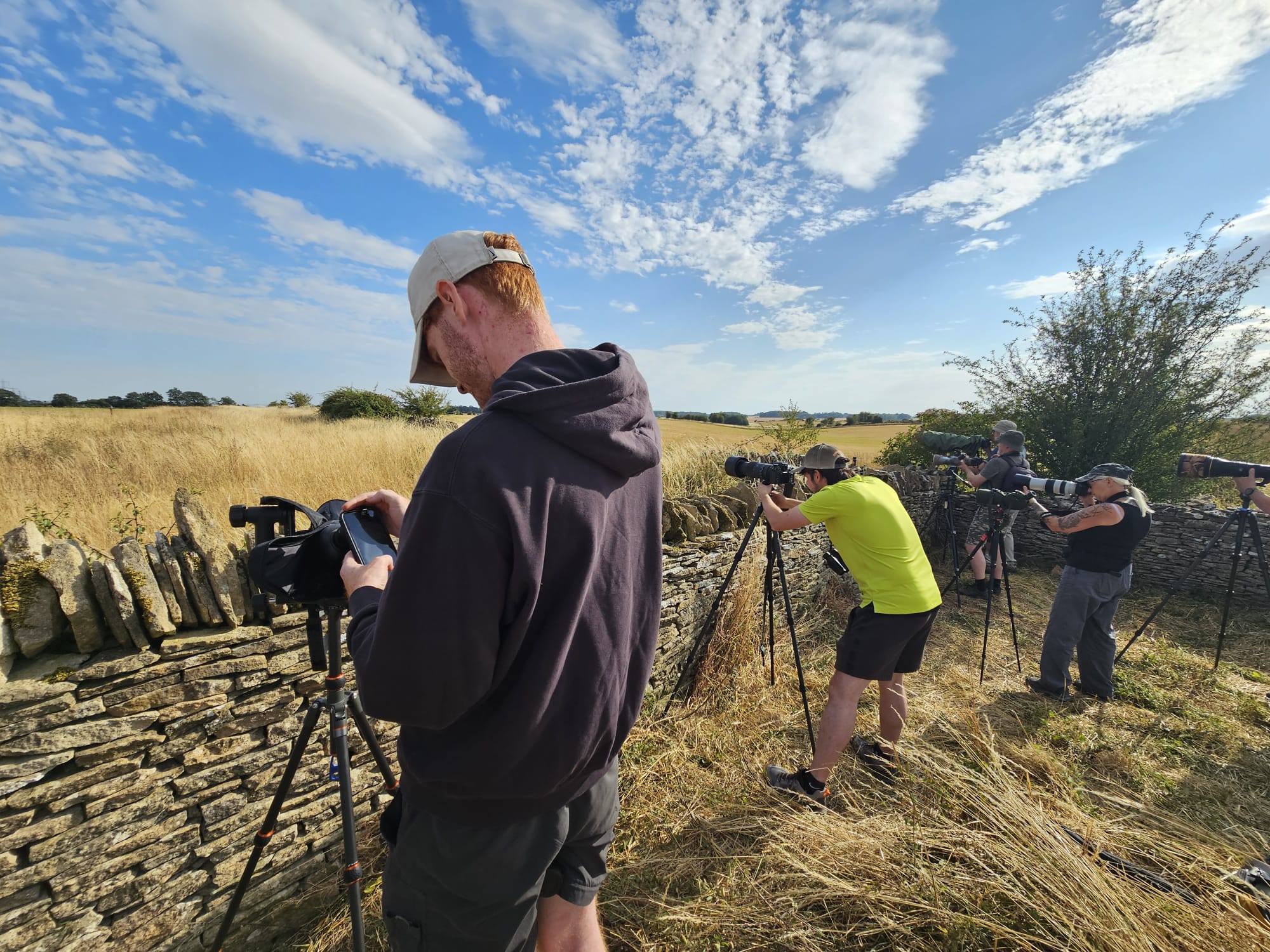
Back in late July, a few of the Ecology team met on a Saturday morning just north of Eastleach, close to the Gloucestershire-Oxfordshire border. The meeting point was a hastily arranged parking area in a farmer’s field, with a small fee collected to support local nature restoration projects.
After a half-mile walk across the countryside, we arrived at the reason for our weekend rendezvous. Waiting for us was an English first and a true mega in the birding community: a Long-tailed Shrike. News of the bird had spread rapidly, attracting enthusiasts from across the country eager to catch a glimpse of this exceptionally rare visitor. The atmosphere was one of excitement and anticipation as birders gathered to witness a species that had never before been recorded in England.
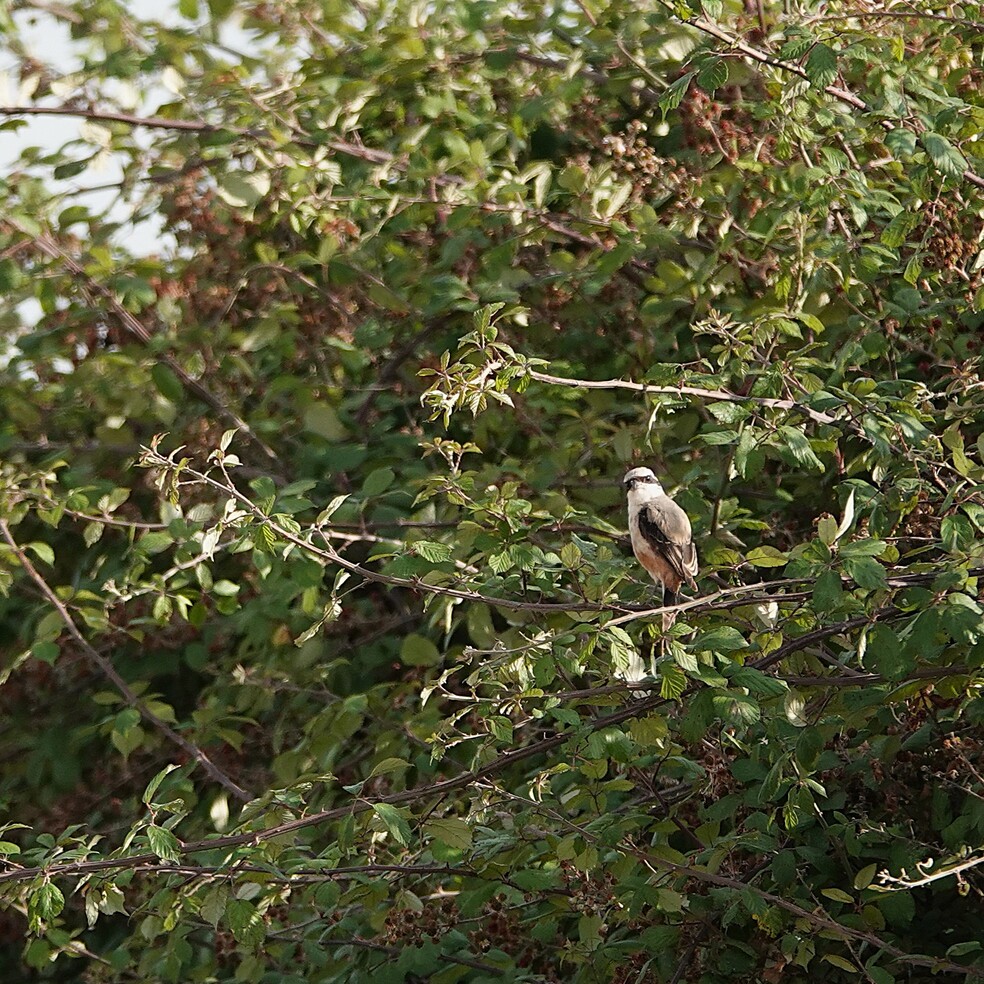
Long-tailed Shrike
The bird was first discovered on 8 July, but news of its presence was kept under wraps until 18 July, when details were released and quickly caused a stir within the UK birding community.
This remarkable sighting represented only the third recorded Long-tailed Shrike in the UK. The first occurred more than 25 years ago in the Outer Hebrides, while the second involved a different individual found just days earlier in Fife. A species typically associated with Central Asia, China and parts of Southeast Asia, this bird had travelled thousands of miles beyond its usual range, making its appearance in the Cotswolds all the more extraordinary.
Fascinating insight
Regularly dropping into the wide field margins to hunt crickets, beetles and other invertebrates, the shrike provided excellent views and a fascinating insight into its behaviour. Just as encouraging was the quality of the surrounding habitat. The species-rich margins and nature-friendly farming practices being employed on the site were clearly delivering benefits for wildlife.
While the Long-tailed Shrike was undoubtedly the star attraction, it was far from the only species on show. Yellowhammers and Dunnocks were present in good numbers, while several remarkably bold Brown Hares seemed entirely unfazed by the gathering of birders. Having become accustomed to weeks of visitors, they happily wandered within metres of groups equipped with an eye-wateringly expensive array of Swarovski, Nikon, Canon and Zeiss optics.
After several hours enjoying the spectacle, and with the summer sun beginning to take its toll, we finally called it a day and headed home. Not only had we witnessed a truly exceptional rarity, but we had also experienced one of the most talked-about birding events of the year, adding one of the rarest visitors ever to reach British shores to our birding lists.
Mike McDonagh, Senior Consultant Ecologist & GIS Technician