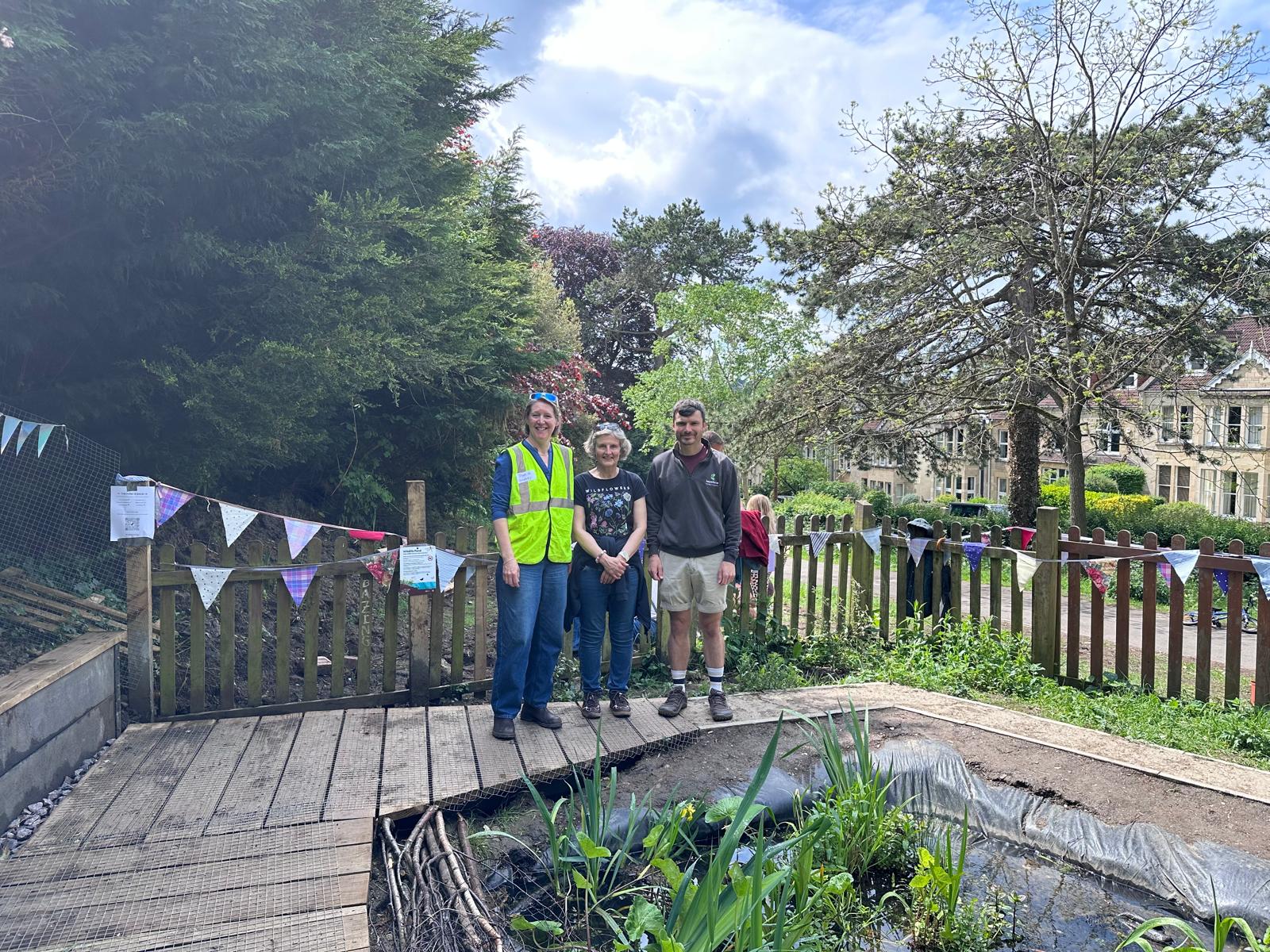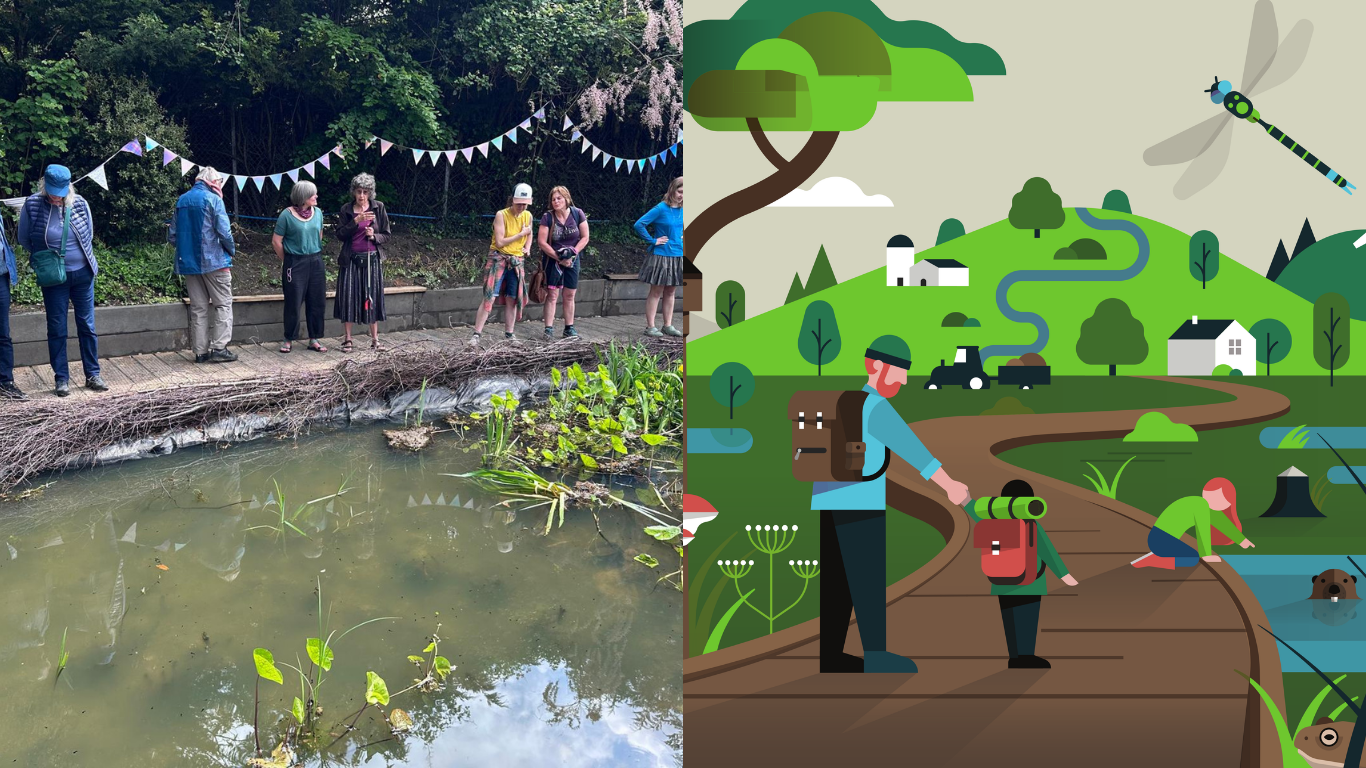
Last weekend, Keystone were proud to attend the official opening of the restored St Andrew’s Pond in St Andrew’s Park, Bristol. The event drew an impressive turnout across all ages. Families gathered around the water’s edge, children helped build a new bug hotel with great enthusiasm, and there were delighted exclamations as young visitors spotted smooth newts and clouds of tadpoles already thriving in the restored pond.
For the community, it was a genuine celebration of a much‑loved urban green space.
For Keystone, it was a powerful reminder of how projects like this can reconnect people with nature, enhance biodiversity, and leave a lasting positive legacy for future generations.
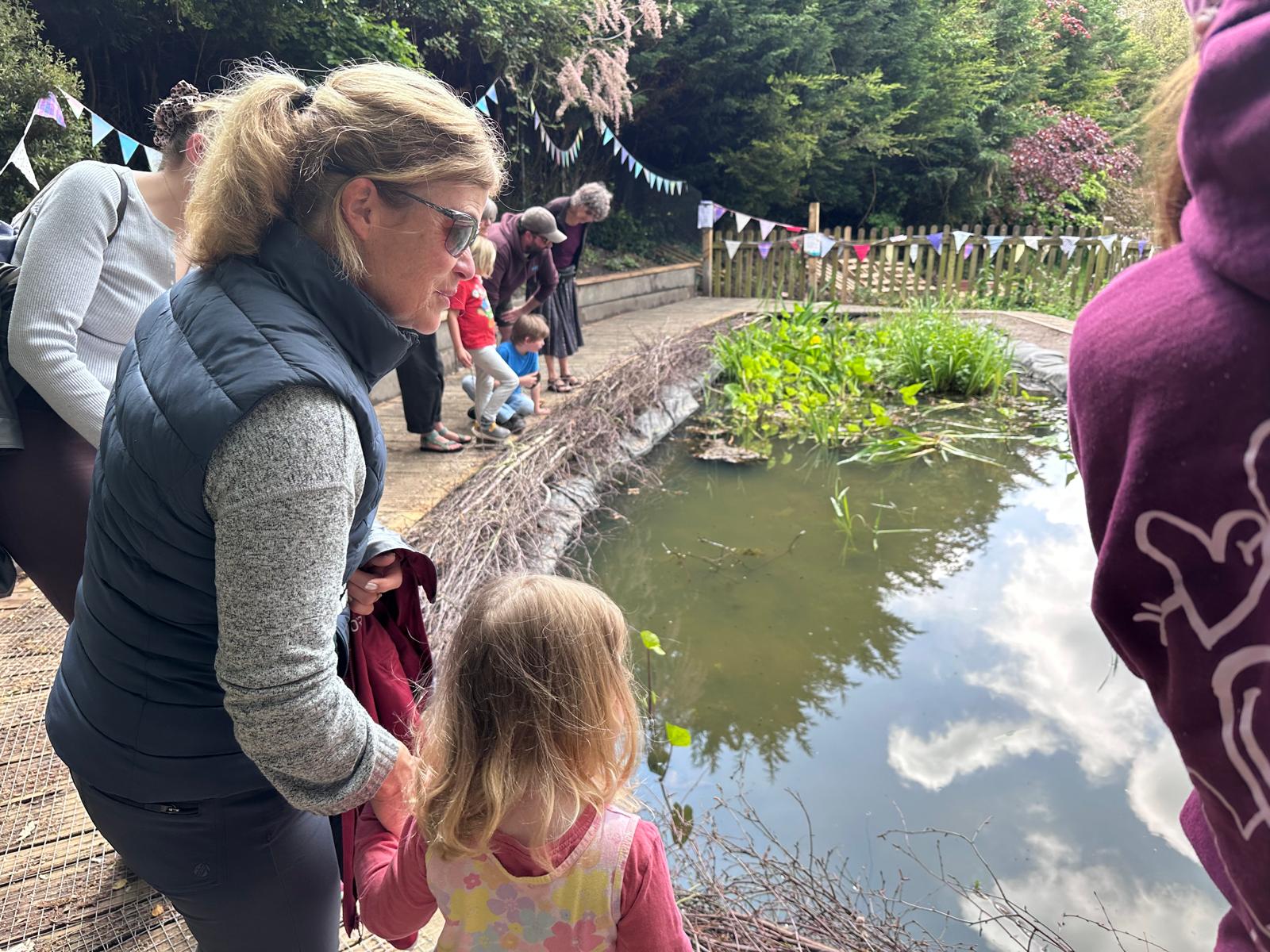
Urban Restoration
Urban restoration projects of this kind are a rare opportunity, so when Kay and Neil from the Friends of St Andrew’s Park approached Keystone about the declining pond and its failing access infrastructure, we were keen to support them. The Friends’ group had worked tirelessly to raise funds and secured support through The Veolia Environmental Trust’s Community Grants Programme. It is worth noting that while public funding can feel difficult to access, private and industrial grant schemes like Veolia’s are often more straightforward, more responsive, and provide a realistic route for community‑led environmental improvements.
An Upgrade for People and Nature
The works were delivered in exceptionally wet conditions in early January, timed deliberately to avoid disturbance to the pond’s large populations of smooth newts, frogs, and toads. Despite the weather and a modest budget, the project achieved a substantial upgrade to both habitat quality and visitor experience.
The old boardwalk, originally built from sleepers laid directly onto the soil, was removed. Much of this timber was repurposed to create a new hibernaculum and basking bank on the southern side of the pond. The new composite sleepers now installed serve a dual purpose: they retain the large bank between the pond and the bowls green, and they provide robust, long‑lasting seating for visitors. These sleepers were sourced resourcefully from an infrastructure project in the North of England. Heavy‑duty angle irons from another local project were reused to pin the sleepers securely in place.
A recycled‑plastic subframe was installed to raise the new, wider deck off the ground, providing a level, durable, low‑maintenance structure that will last for decades. This upgrade has also significantly improved accessibility. Supported wheeled access is now possible via a purpose‑built widened gateway and a new access ramp, opening the pond up to many more visitors who previously struggled to reach it.
Ecological Care
Before desilting and relining the pond, we carefully removed and stored the existing pond vegetation, ensuring that non‑native species were excluded before replanting. Pond water was retained in bowsers to preserve invertebrate larvae and maintain elements of the pond’s microbiome. Some of the fine silt was also retained and decanted into a geocell grid, where it was stabilised with pea shingle to create additional micro‑habitats and prevent future erosion.
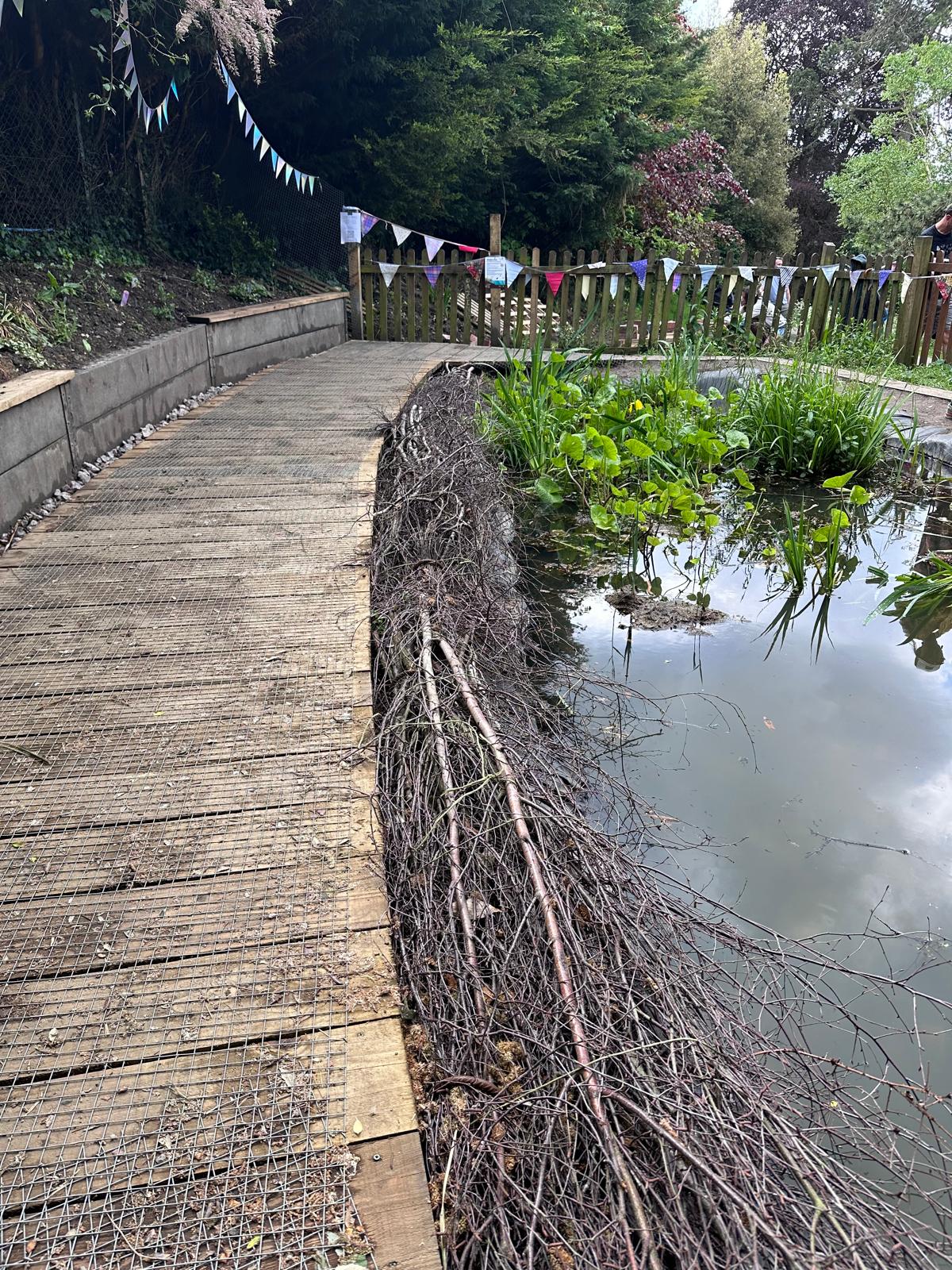
As a trial to further enhance biodiversity, birch fascines were installed along the northern pond edge to create invertebrate habitat and soften the margins. These were sourced from a heathland restoration project in the Forest of Dean, where we had supported Gloucestershire Wildlife Trust with birch clearance and heathland regeneration. The Friends group will now take forward the next phase, establishing new marginal planting to protect the liner and enrich the pond’s edge habitat.
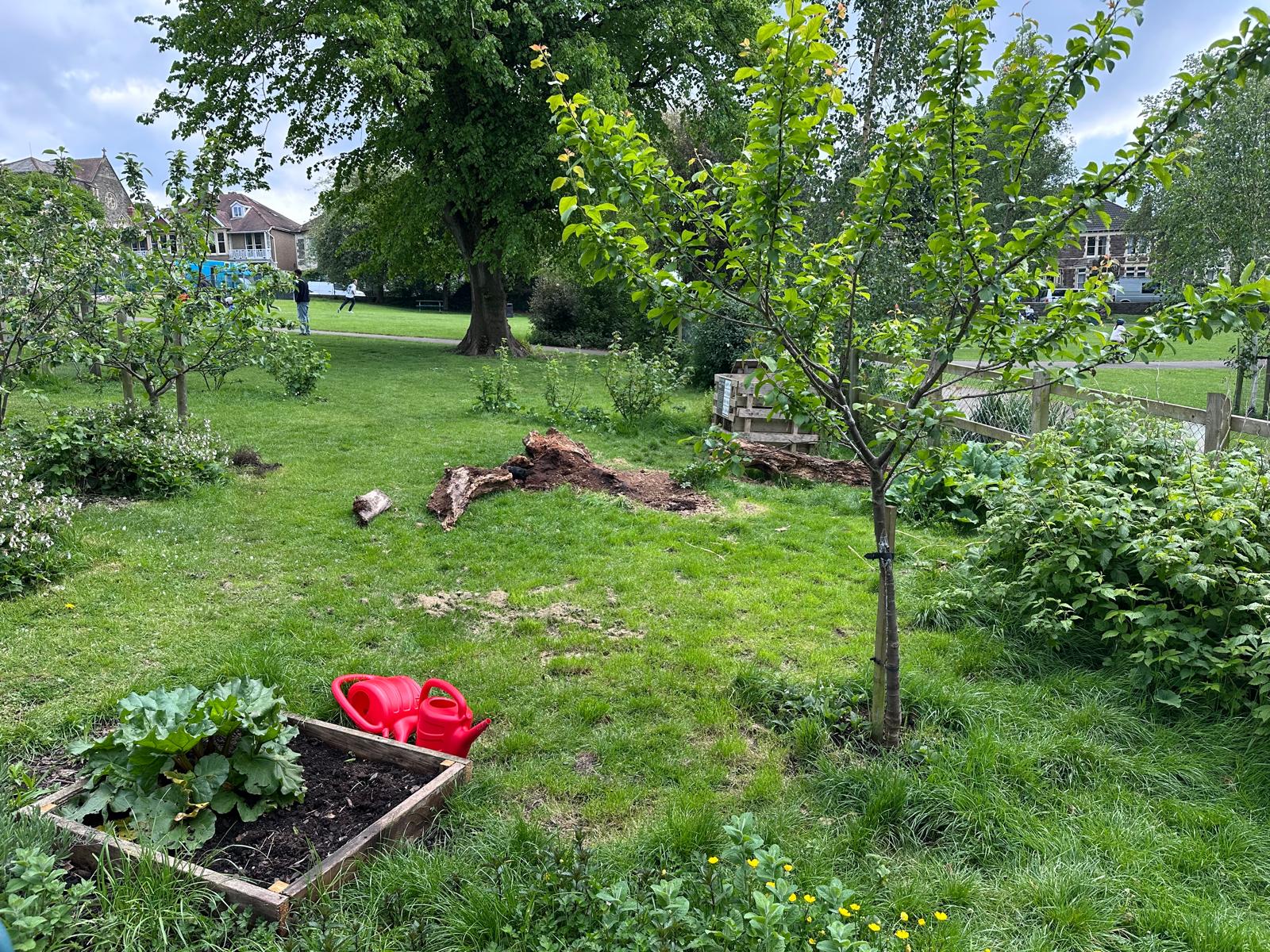
St Andrew’s Park itself is a substantial oasis within the city, lovingly enhanced over many years by the community group and its supporters. The naturalised areas of tree planting, the mini orchard, and the scattered log piles all contribute to a landscape that is both ecologically rich and deeply enjoyed by visitors. Many of these log piles double as habitat for rot‑loving invertebrates and as informal play structures for children, reflecting the park’s blend of biodiversity, creativity, and community stewardship.
The project stands as a clear example of what can be achieved through community determination, creative reuse of materials, and targeted support from accessible grant programmes. The restored pond, improved access, and new habitat features have already made a noticeable difference, and Sunday’s turnout showed just how deeply this space is valued by the local community.
Hugh Smith, Operations Manager