Challenge
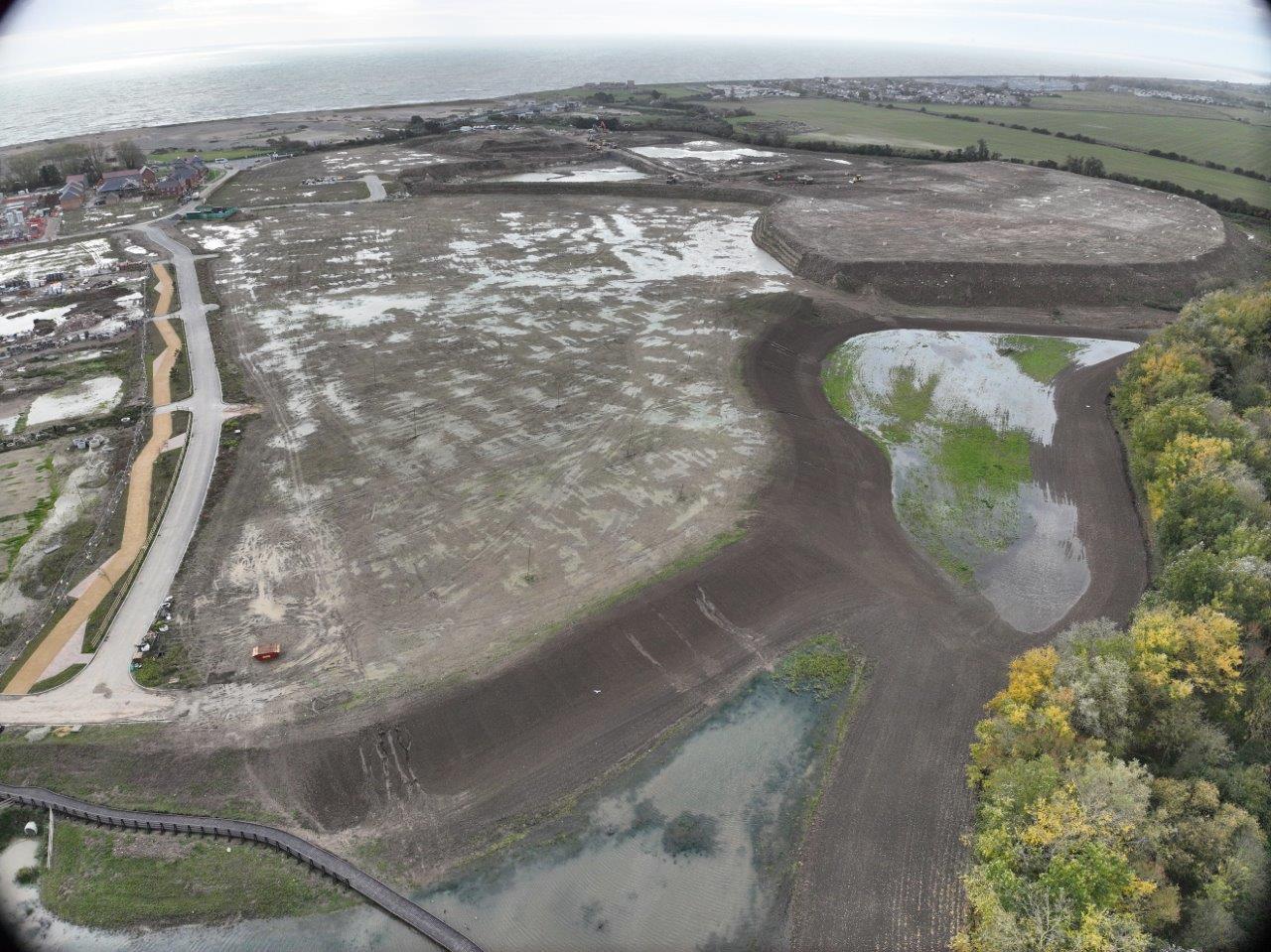
The Martello Lakes development is a 50-hectare residential led scheme located close to the Kent coastline and adjacent to the namesake Martello Lake. The project required a carefully designed access solution that balanced public accessibility, durability and ecological sensitivity.
The wetland had been constructed as part of the site’s drainage and biodiversity strategy, presenting several engineering and environmental constraints.
Key challenges included:
- Steep ground levels created by surcharge remediation work
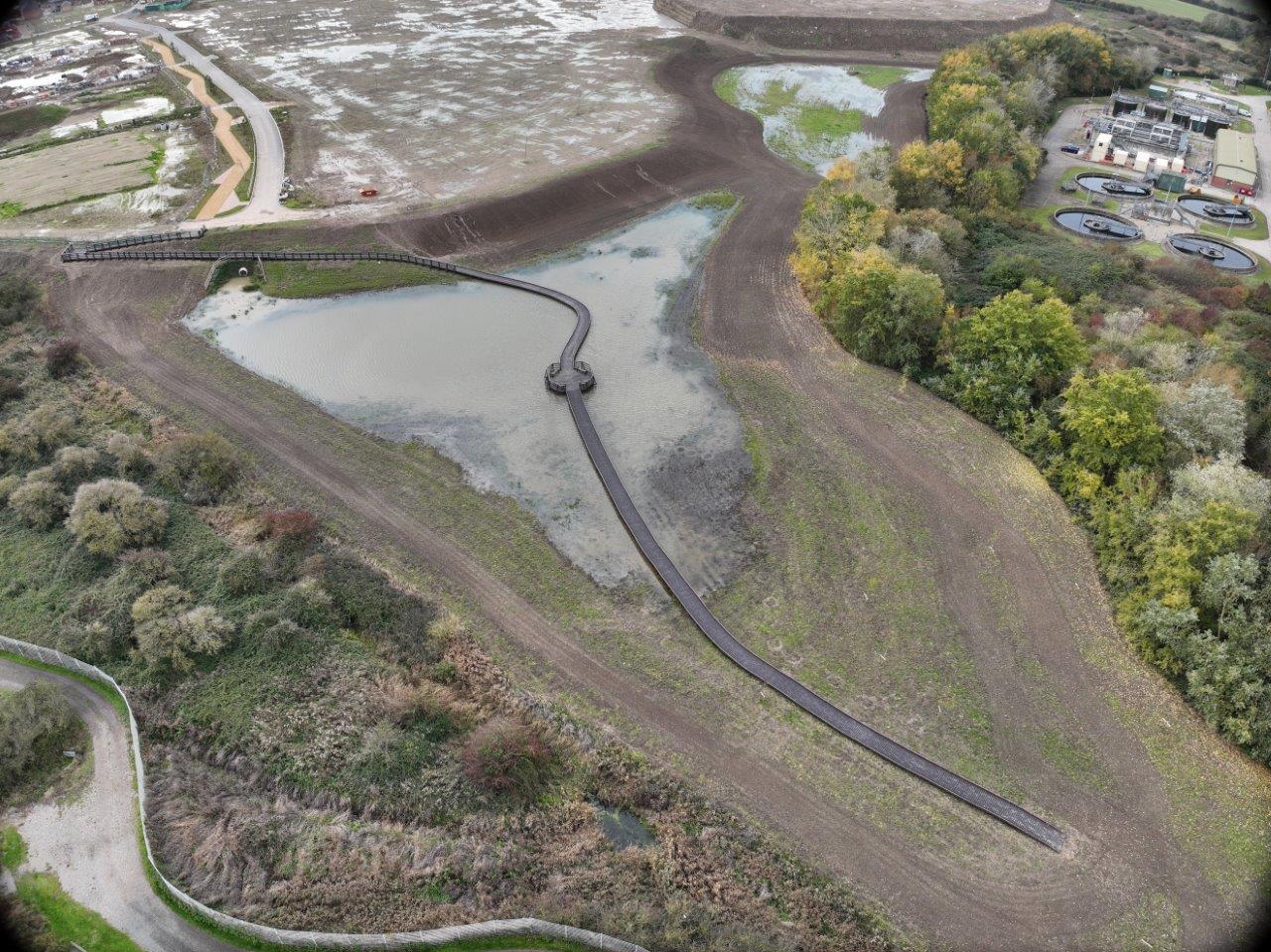
- Integration with a large drainage headwall feeding into the wetland
- Maintaining accessibility for the coastal path and local residents
- Designing a structure that remained above water body levels while minimising fall-from-height risks during periods when water levels are lower
- Delivering installation safely in soft, waterlogged ground conditions
Early contractor engagement allowed Keystone to provide practical design input and ensure the boardwalk solution would function effectively within these constraints.
Approach
Following initial meetings with the client, end client and their consultants, Keystone began the detailed design process, drawing upon extensive experience delivering boardwalks in challenging wetland environments.
The final design incorporated:
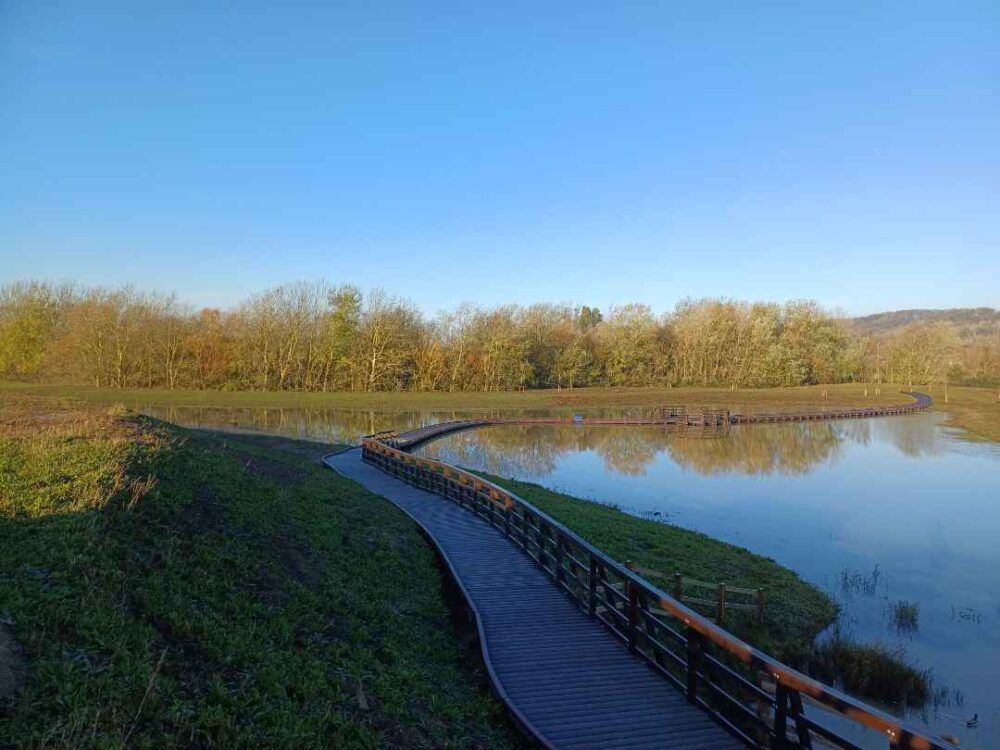
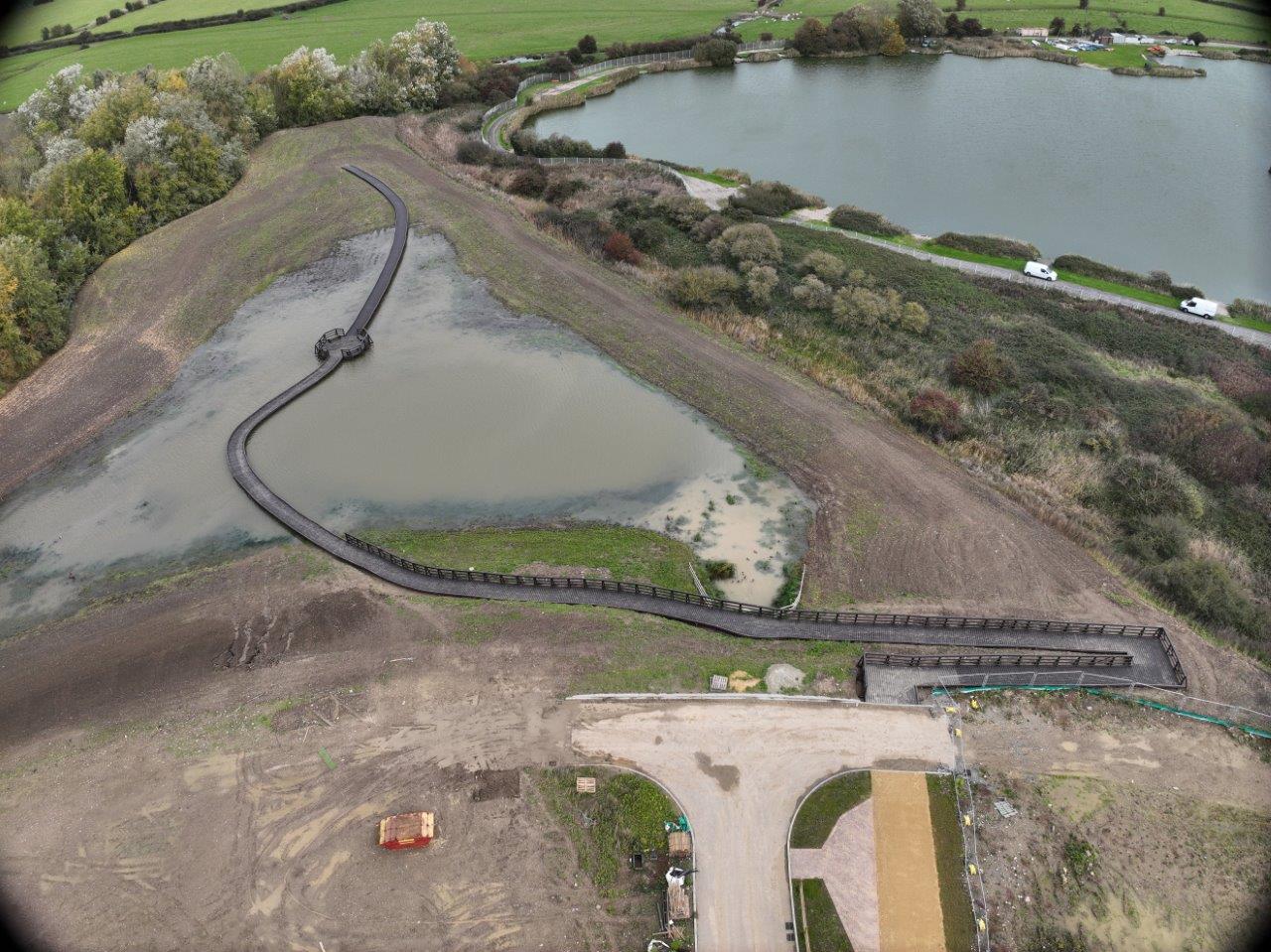
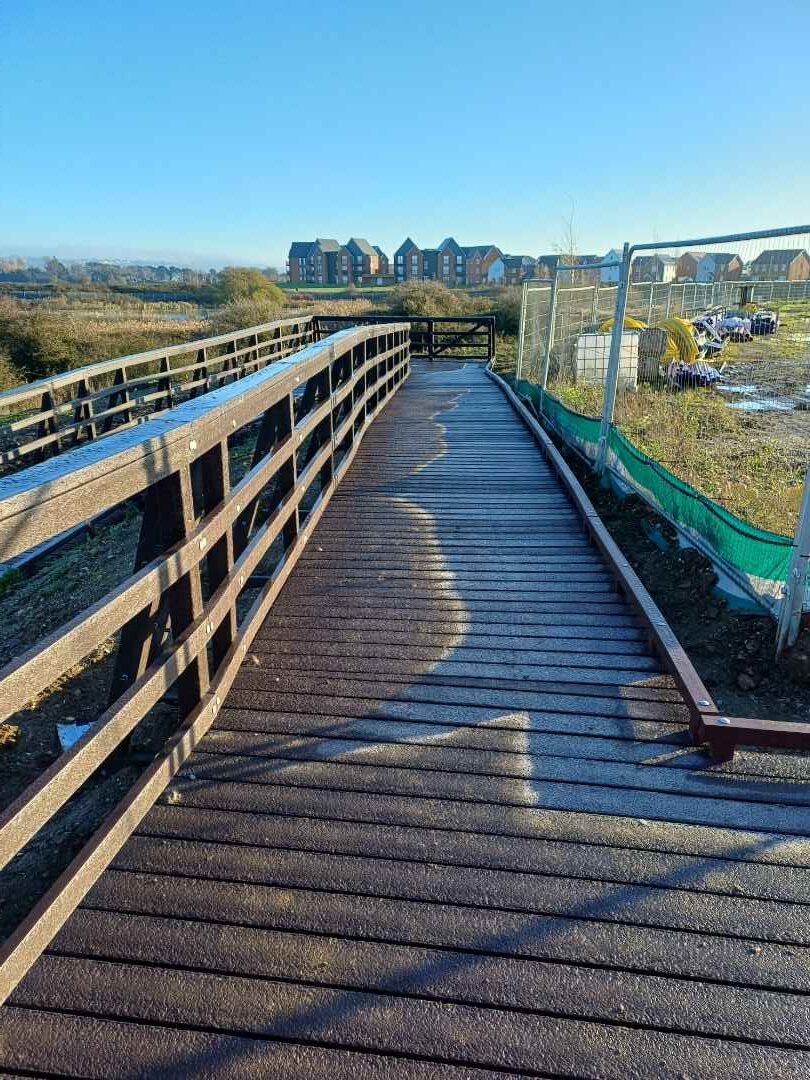
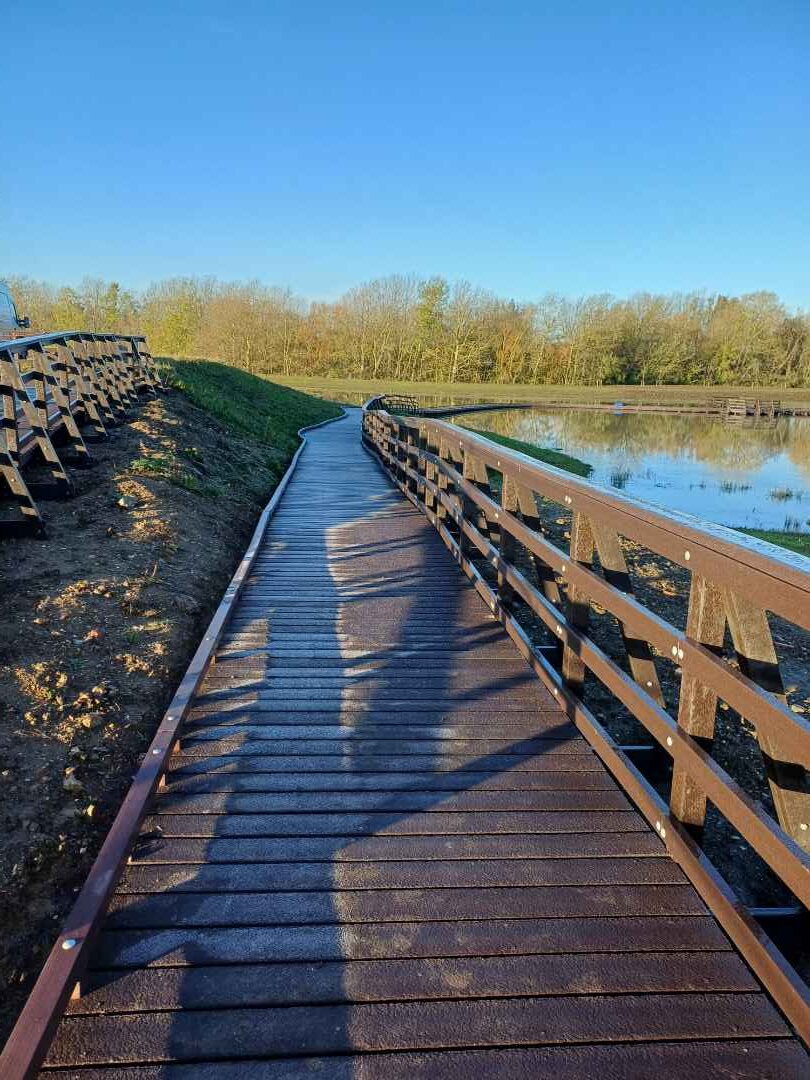
- A disabled access-appropriate ramped access
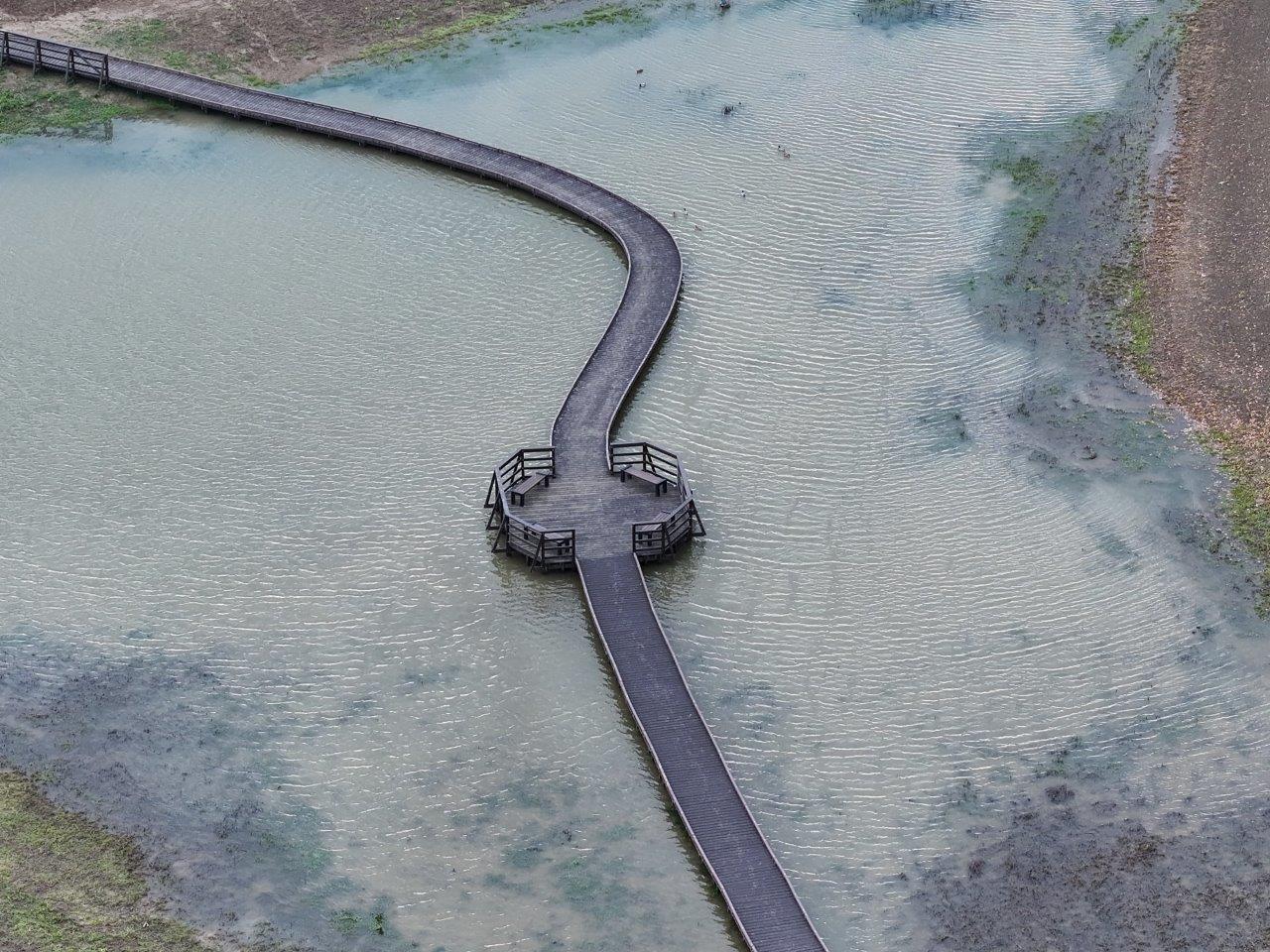
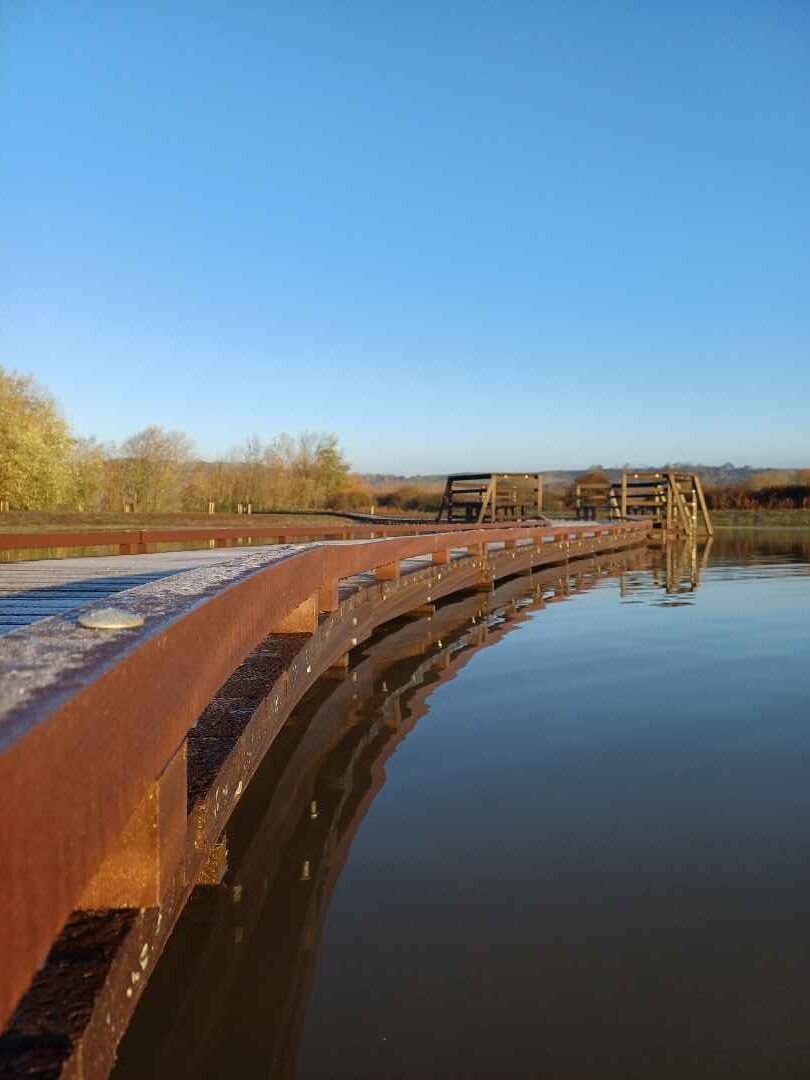
- A headwall viewing platform overlooking the wetland
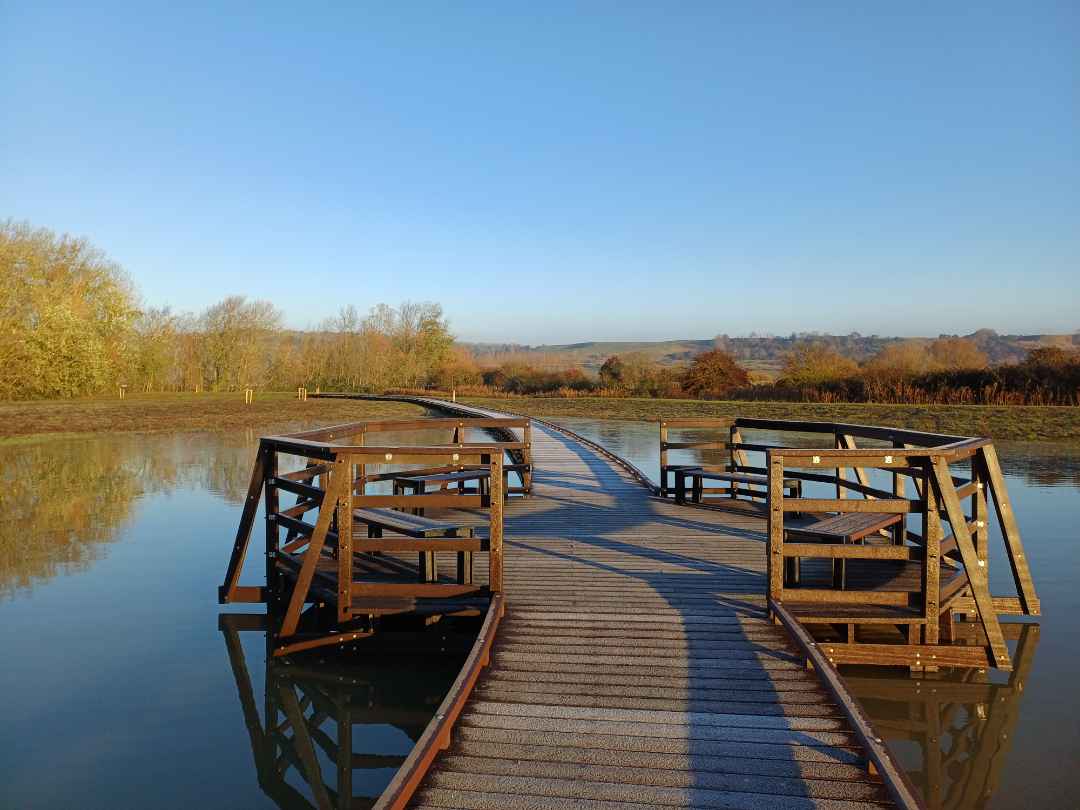
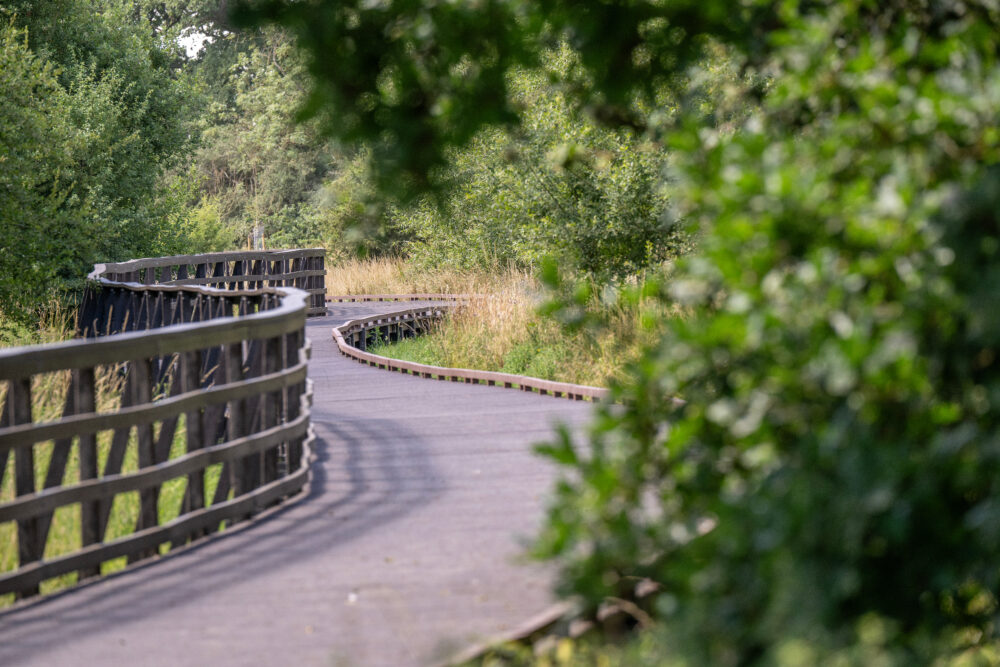
- Multiple handrail sections for public safety
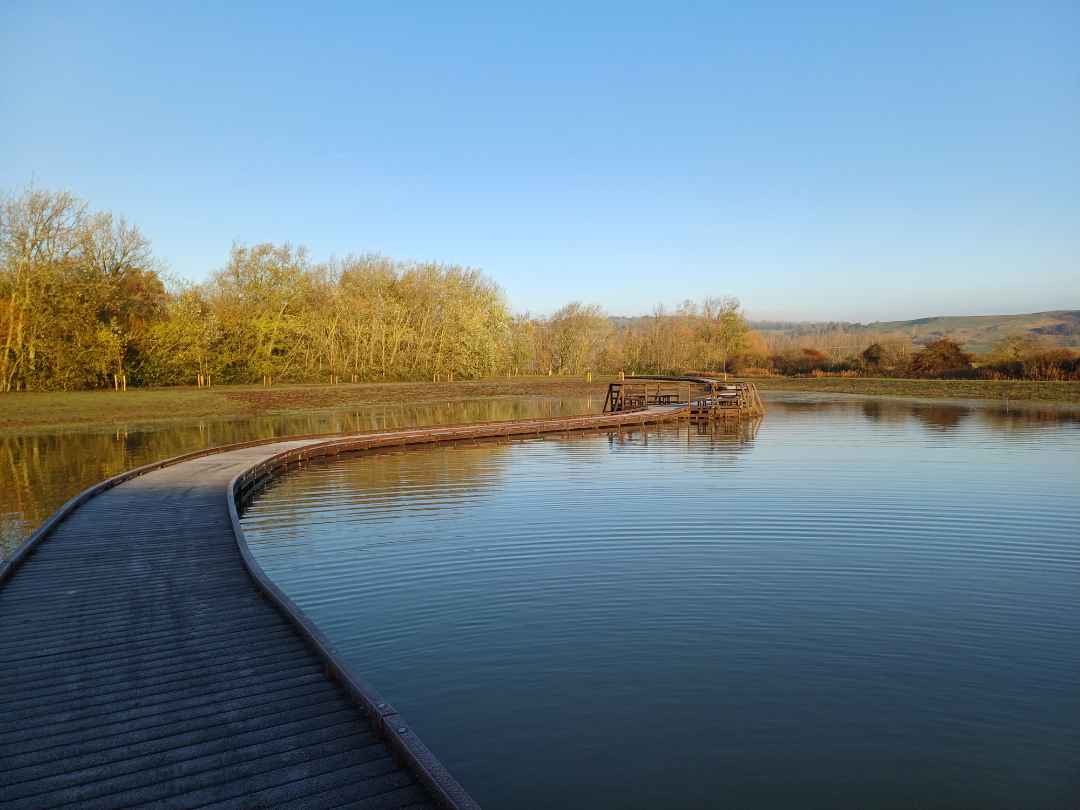
- A central platform with integrated seating and provision for future public art
- Carefully coordinated tie-in points to surrounding infrastructure
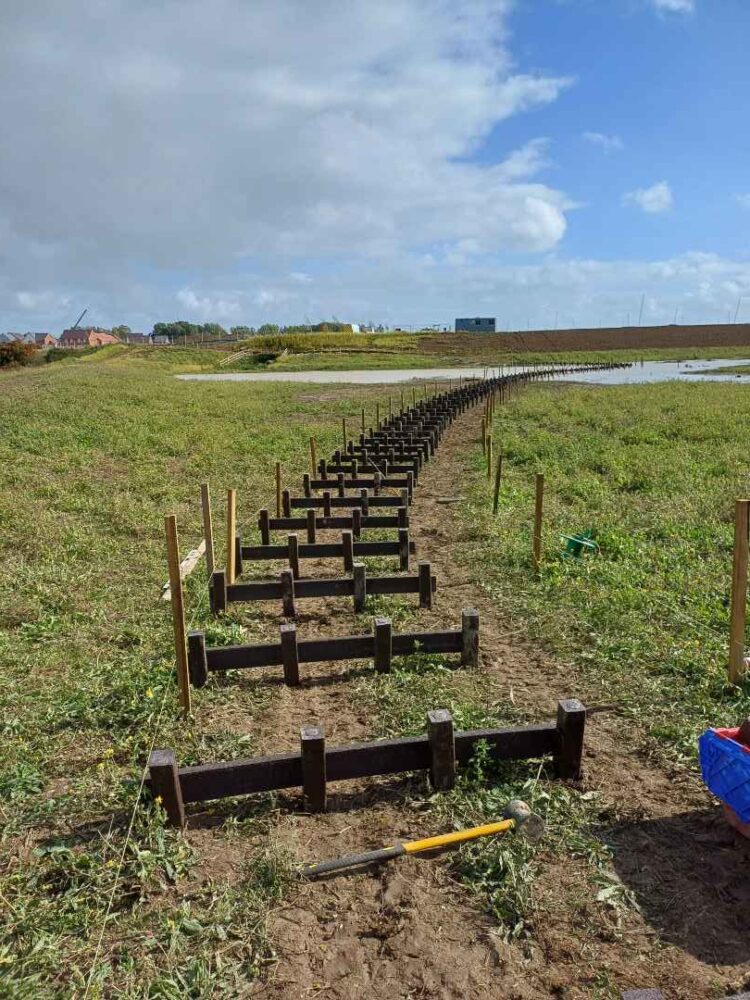
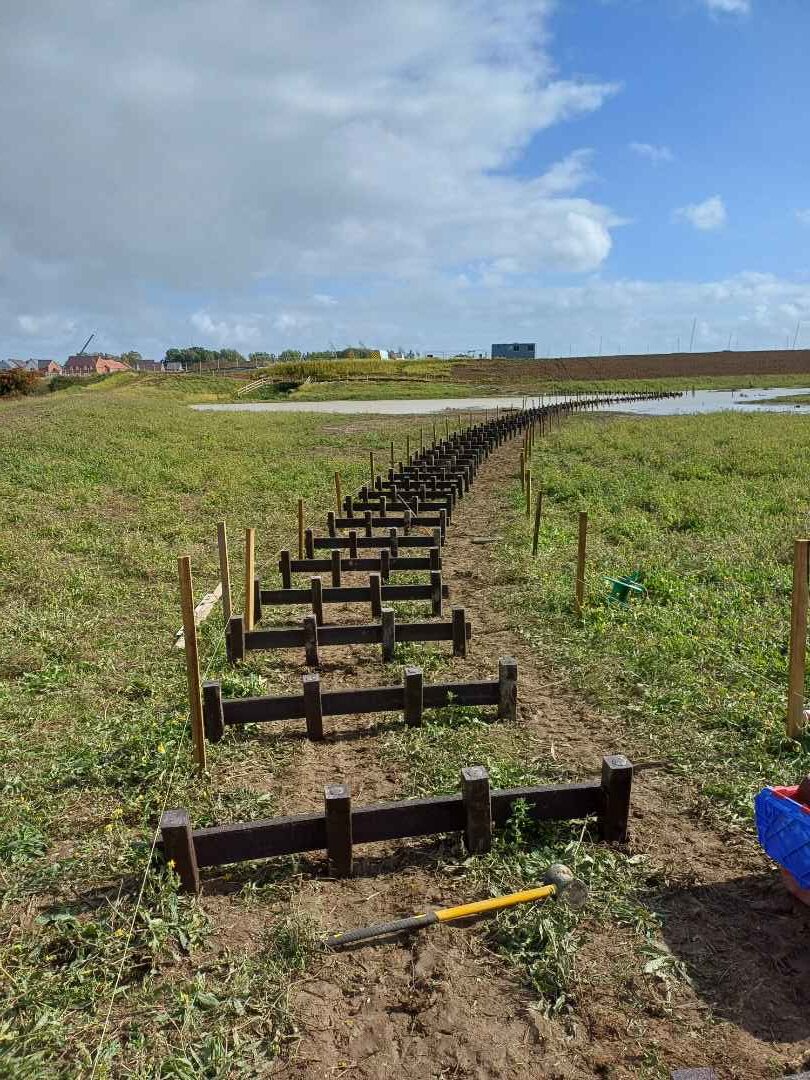
A full chainage layout was produced and agreed with the client, allowing precise on-site set-out and ensuring finished deck heights matched the engineered design.
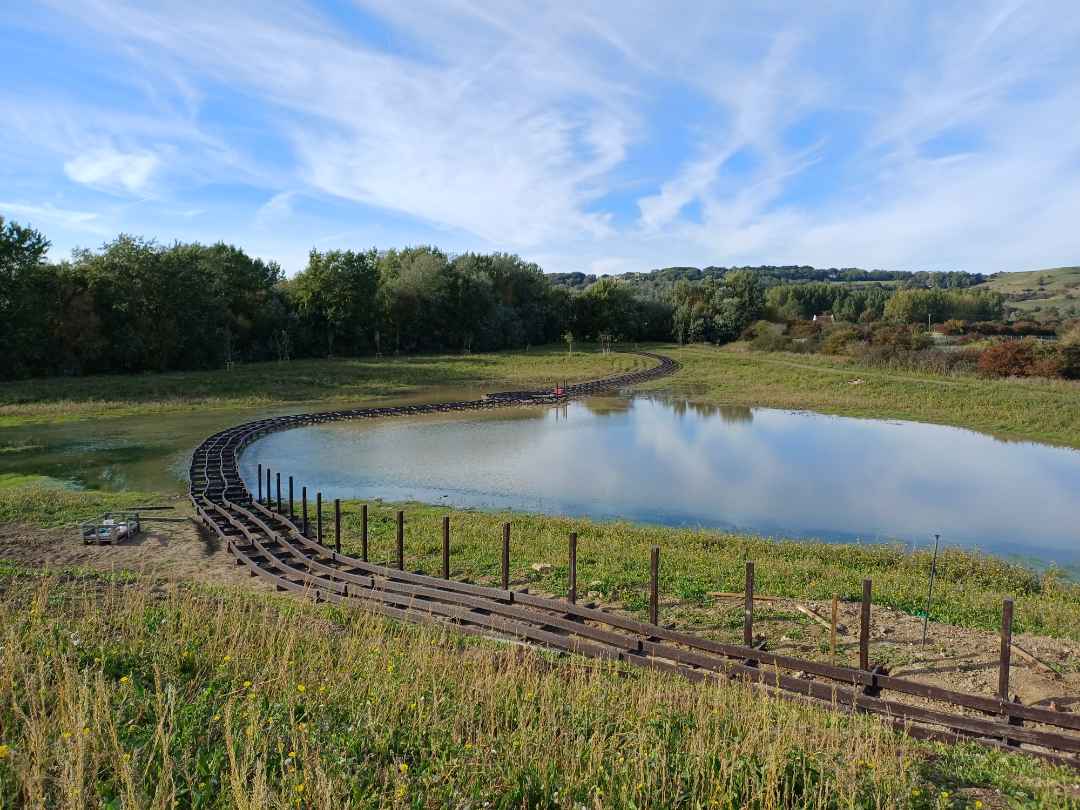
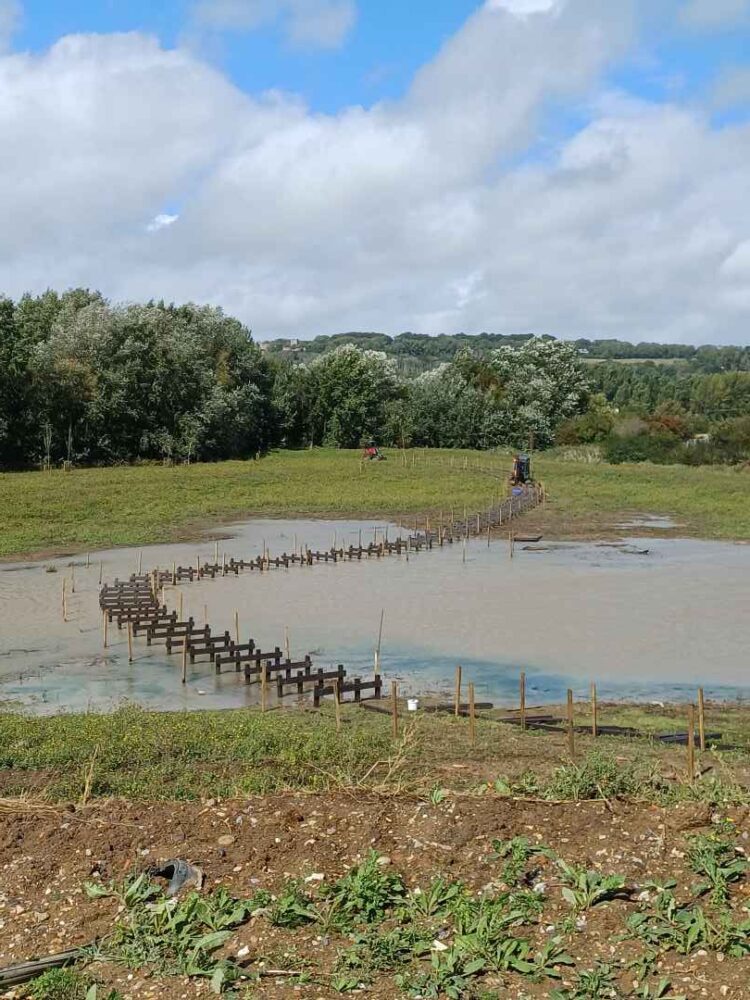
Construction commenced in August 2025, with close collaboration between Keystone and Talbot Landscapes to ensure that the ramped sections were formed accurately within the surrounding landscape works.
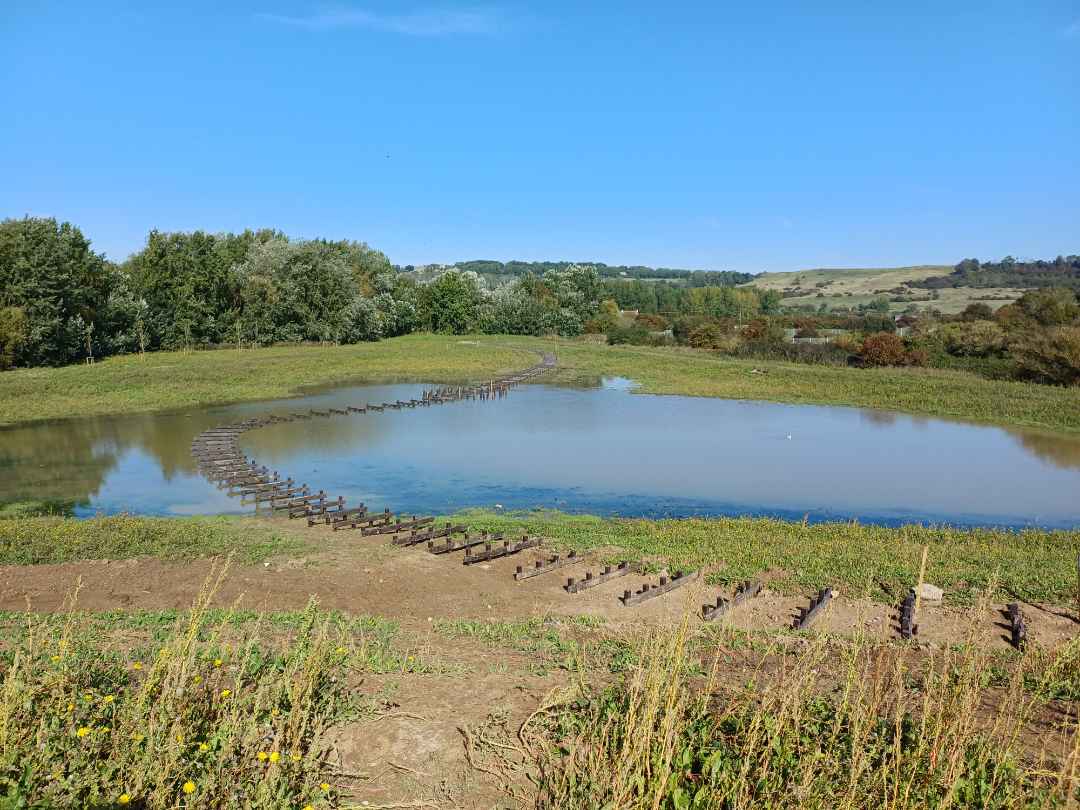
The wetland had already begun holding water, requiring careful planning to ensure safe plant access and installation operations.
Materials were manufactured from high-quality recycled HDPE, chosen for its durability and low maintenance requirements. Thermal expansion characteristics of the material were accounted for during the design phase to ensure long-term structural stability.
Due to the exposed nature of the site, steel site cabins were utilised to provide sheltered areas for material preparation during periods of high wind.
The majority of structural posts were installed using a harmonic post driver, enabling rapid and precise installation within the engineered ground conditions. Efficient post installation allowed the substructure to be assembled quickly before wetter conditions could restrict plant access to the wetland.
At the headwall crossing point, the structure required a specialised solution. Working closely with the client and structural designers, screw piles were selected as the most appropriate foundation system, allowing the boardwalk structure to be supported without imposing loads that could compromise the engineered headwall.
Due to the exposed nature of the site, steel site cabins were utilised to provide sheltered areas for material preparation during periods of high wind. This aided microplastic containment, preventing pollution to the installation site. Microplastic emissions were closely managed on site with dedicated capture methods including vacuum extraction and strict materials processing procedures to prevent emissions into the install site.
Outcomes
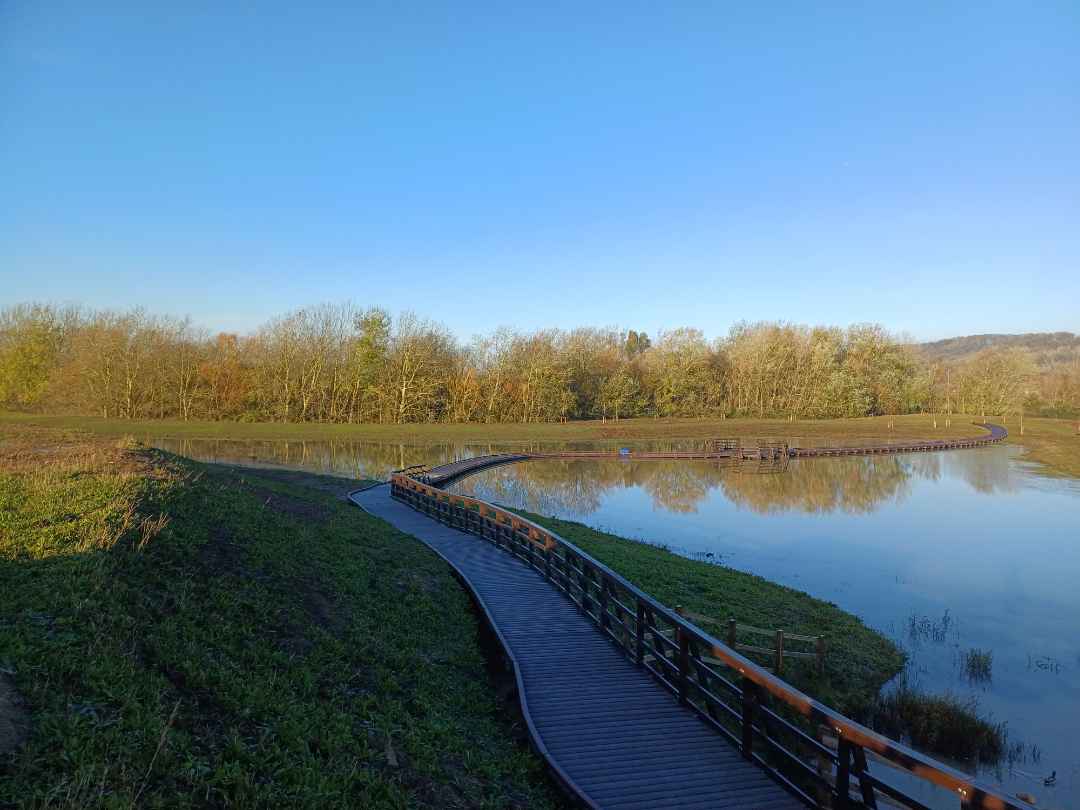
The completed boardwalk provides a visually striking and durable access route across the wetland, seamlessly connecting the development with the surrounding public open space and coastal path network.
Constructed from recycled HDPE, the structure offers long-term durability with minimal maintenance requirements, ensuring a sustainable access solution for the development.
As the wetland habitat matures, the boardwalk will allow residents and visitors to enjoy the landscape year-round while protecting sensitive habitats from disturbance.
The project demonstrates Keystone Habitats’ ability to design and deliver high-quality green infrastructure within environmentally sensitive landscapes, combining engineering practicality with ecological consideration.