
BS 3998 has been guiding tree work in the UK for decades, with the current edition released in 2010. Until recently, I hadn’t fully understood how revisions and updates to the standard were developed. I assumed there was a room full of experts quietly producing them. Last year, I was invited to join the panel reviewing BS 3998:2010 and jumped at the chance to contribute and learn. This blog takes you behind the scenes to show how the standard is updated, why it matters, and what it means for everyone working with trees. Whether you’re an arboriculturist, consultant, or simply curious about tree care, here’s an inside look at keeping UK trees healthy, safe, and thriving.
British Standard 0: 2021 ‘A Standard for standards – Principles of standardisation’ sets out everything you’d ever need to know about the process of creating and reviewing standards and their relationship to other similar documents. If you’re involved with producing documents such as policy, strategies or technical reports, it makes for an interesting read.
To set the scene: every industry worldwide has a range of standards, specifications, codes of practice, method statements, and guides. Here, we’ll clarify the key definitions used in conservation and the environmental sector.
- Methods and Method statements: These are usually a document that defines how a particular task or project will be undertaken.
- Guides: Sometimes referred to as technical guides or TG, these provide general recommendations and information as to how something should be done to be compliant with codes of practice.
- Codes of Practice (CoP): Generally published by industry bodies, these will set out the principles agreed by their membership as to how they, as a sector are going to do something
- Specification / performance specification: Generally used to confirm the exact details for a material, process or method.
The British Standards Institution (BSI) and the International Standards Organisation (ISO) provide the following definition of a Standard:
There is no legal obligation to follow a Standard, in fact legal obligations are strictly outside of the scope of Standards. However, Standards may be called up in statutory regulations and are often used as a point of compliance in contracts. For example, a Tree Preservation Order consent for works to a protected tree often require that works are undertaken in accordance with BS3998:2010.
To provide some context in relation to other common documents. ISO documents (International Standards Organisation) do what they say on the cover, they are international standards. SEN documents (European Standards Committee) apply Europe wide including the UK and BS standards apply to the UK only but are held in high regard in other countries. Parts of Australia are using BS5837:2012 for example.
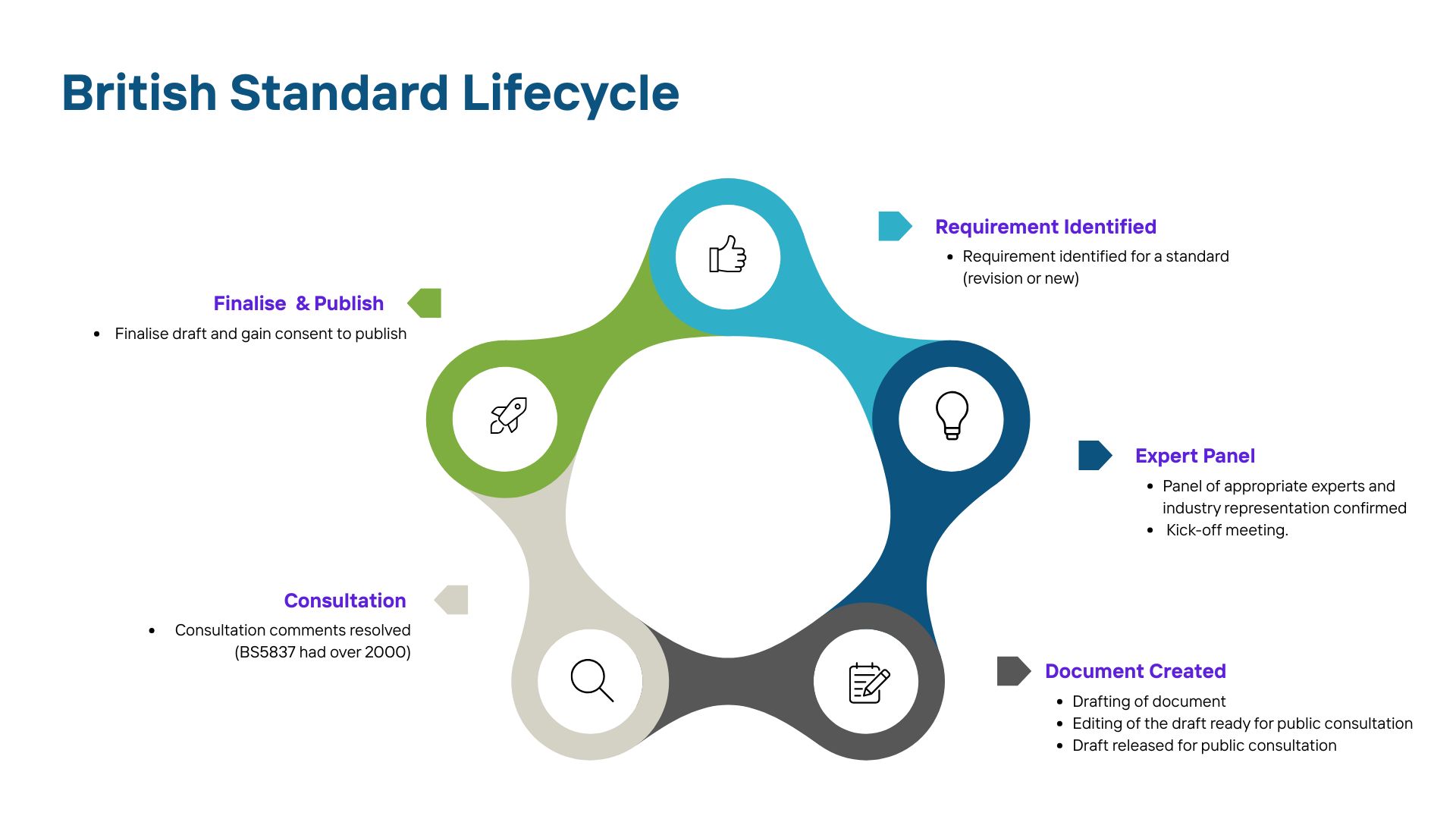
The BS 3998 panel is made up of highly respected tree officers, consultants, contractors, and educators, led by Jon Kiely. We’re currently at stage three, focusing on understanding the purpose of the document for the many different parts of the industry that rely on it. While perspectives may vary. Whether from a tree officer, an arborist, or an ancient tree specialist, our goal is to produce a standard that is practical, accessible, and actively used, not something that sits on a shelf. Ensuring good tree care across all disciplines is at the heart of this work. In the coming weeks, we’ll be inviting early feedback from everyone involved in tree management, and after reviewing these comments, we’ll progress to the next stages, aiming to release the draft for wider consultation around spring next year.
In the meantime, if you have any questions or would like to raise any comments about British Standard 3998 ‘Tree Works’ please contact me on Neil.Davies@keyenv.com. Updates when appropriate will be published by the Arboricultural Association . The panel and I will also keep you updated on progress via my LinkedIn page: www.linkedin.com/in/ndaviesarb
Neil Davies, Head of Arboriculture