PRACTICAL ECOLOGICAL SOLUTIONS
click here for > 
 
  Please Select from the following Company Services:  
 
  Ecological Consultancy
  Ecological Contracting

 Project Examples


Project Examples

Shaw Ridge School - Swindon

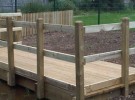
Keystone Environmental carried out protected species surveys on this proposed new school complex to facilitate its regeneration. Great Crested newts were found in four ponds surrounding the site. Extensive surveys and Mitigation were carried out on this site to permit development to be undertaken under Licence. A Great Crested Newt breeding pond was constructed by Keystone, along with a dipping platform to allow safe access for children of all ages. This also restricts the impact on the newt habitat but allows for a controlled access for educational purposes. Surveys undertaken include:

  • Extended Phase I Habitat Survey
  • Great Crested Newt Survey
  • Bat Surveys
  • Reptile Survey
  • Great Crested Relocation and Mitigation

Client: Swindon Borough Council

Biodiversity Action Plan - Longcliffe Quarry

Recognising the potential to create new habitats from previously worked land Longcliffe Ltd. approached Keystone to carry out an ecological audit of all land in their ownership and thereafter produce a Biodiversity Action Plan (BAP) setting out targets and actions for biodiversity gain in line with the Local and National BAP. The process is ongoing and further work is scheduled for 2009.

Client: Longcliffe Ltd.

Ecological Risk Assessments - M23 Collision Zone

Having entered into a framework agreement with InterRoute Keystone is contracted to provide Ecological Services (consultancy and contracting) in relation to the highways project throughout the south-east of England. Under this contract our ecologists carried out Ecological Risk Assessments of four stretches of motorway verge where tree felling within collision zones was proposed. Our brief was to identify constraints to the proposed works and make recommendations for legal and policy compliance, including the need for Phase II surveys.

Client: InterRoute

Dormouse Bridge Installation - Furfield, Kent

A programme of ecological mitigation works was assigned to Keystone to improve the habitat for dormice including at a housing development site in Maidenhead that included; 450m of hedge laying, planting of native hedge species, and the installation of a 'Dormouse Bridge' to nullify the impact of a gap created by an emergency access road leading into the development site.

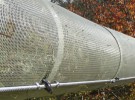
The tunnel design serves as an effective access crossing that encourages unrestricted Dormouse movement linking the two hedgerows. Light gauge galvanised steel mesh tubes were linked together to form a tunnel which was suspended on tensioned parallel steel cables suspended between two supporting telegraph poles. The bridge is modular in design so that each of the mesh tube sections can be connected together for ease of installation. To make the tubes inviting as a crossing for dormice, they are filled with a variety of native climbing plant species.

Client: Ward Homes

Major Newt Exclusion fencing and stock fencing scheme - Gillingham, Dorset

As a preferred contractor for Wessex Water, Keystone were appointed to install 4km of newt exclusion fencing and stock fencing on arable land earmarked for a pipeline upgrade. The work had to be completed in a relatively short time frame to allow a sufficient number of days for the newt capture and translocation period to be completed. A number of field boundaries in the form of hedges and ditches had to be negotiated along the fence alignment, which required sensitive habitat clearance works and the installation of temporary newt crossings beneath the working footprint. The proposed pipeline route crossed a large number of privately owned fields with livestock present that required a variety of stock fencing options according to the landowners specific requests.

Client: Wessex Water

Design and Implementation of Combined Mitigation Strategy - Grampian Foods

When Barratt Homes acquired the Grampian Foods site for residential development Keystone were requested to review an existing mitigation strategy, amend this as necessary in light of the provision of a detailed layout and liaise with the Council Ecologist to gain the approval of this strategy. Once the mitigation strategy is approved our consultancy and contracting team will work in unison to implement Great Crested Newt and reptile translocation, destructive searches and supervision of works in respect of bats, reptiles and Great Crested Newts, and habitat creation measures such as the construction of hibernacula and the installation/constructions of Barn Owl nest sites and bat boxes/roosts.

Client: Barratt Homes

Great Crested Newt Mitigation - Shaw Ridge Primary School

Keystone were initially brought on board to undertake an Extended Phase I Habitat Survey in respect of a planning application for the construction of a new primary school and the demolition of the existing school buildings. Phase II surveys were undertaken for Great Crested Newts, bats and reptiles, which demonstrated likely absence of bats and reptiles but the presence of a Great Crested Newt metapopulation within 500m of the site. We subsequently designed, and working with our contracting department, implemented a mitigation strategy involving the application for an EPS licence, installation of newt fencing and pit traps, newt translocation, scrub clearance, pond restoration including fish removal, pond creation and monitoring of the newt population.

Client: Swindon Borough Council

Ecological Baseline Surveys and ES Chapter - Quartzite Quarry

In respect of a planning application for an extension to the existing quarry, a Review of Old Minerals Permission and quarry restoration Keystone were instructed to undertake ecological surveys including: Extended Phase I Habitat Survey, Great Crested Newt Habitat Suitability Assessment, Dormouse Survey, Badger Survey, Preliminary Bat and Barn Owl Survey, Bat Activity and Emergence Surveys, Otter, Water Vole and White-clawed Crayfish Surveys to establish a current baseline. Using this baseline information we produced the ecology chapter of the ES, carrying out an Ecological Impact Assessment in accordance with the current guidelines produced by The Institute of Ecology and Environmental Management. Ecological input was also given to the design of a restoration strategy.

Client: Cemex

Artificial Badger Sett Creation & Main Sett Closure - Helston, Cornwall

Keystone were commissioned to create a large artificial Badger sett comprising fifteen chambers with eight entrance holes and multiple linking tunnels in addition to two annexe setts . Once constructed, the artificial sett was closely monitored for signs of occupation. Once occupancy was successfully achieved, the existing main sett within the development site could be subsequently closed by installing vertical Badger proof fencing around the entire perimeter of the sett complete with two-way exclusion gates. Following the exclusion phase the main sett was successfully vacated and subsequently closed following a destructive search of the site.

Client: Taylor Wimpey

Great Crested Newt and Invertebrate Surveys - M4 New Project

Keystone were commissioned to carry out Great Crested Newt and terrestrial invertebrate surveys of a proposed 24km alignment for a new motorway across the Gwent Levels. For Great Crested Newts we undertook Habitat Suitability Index assessments of 153 waterbodies, reens and ditches within 500m of the proposed route, followed by 4-day presence/absence surveys and 6-day population size class assessments where Great Crested Newts were found. The work was carried out during the optimal survey season at 1 week's notice using a team of 14 surveyors working under Countryside Council for Wales Great Crested Newt survey/handling licenses. For invertebrates we carried out habitat suitability assessments of the proposed route, followed by three detailed invertebrate surveys of those sites identified as warranting further surveys. Five survey methods were combined to gain an indication of the invertebrate species present and their distribution: sweep netting; direct searching; beating of vegetation; pit trapping; and window trapping. The latter two methods involved the setting and checking of around 400 traps.

Client: ARUP

Habitat Mitigation Works - Chinnor Cement Quarry, Oxfordshire

Keystone undertook a full ecological survey of a former cement works in Chinnor, Oxfordshire adjacent to a chalk pit SSSI. The 71.4 hectare quarry site has a rich diversity of both species and habitats and includes a number of protected species including Badgers, bats, Red Kites, Great Crested Newts and reptiles. The role of Keystone Contracting was to facilitate the newt and reptile translocation programme by initially installing a 7km heavy duty exclusion barrier around the entire perimeter of the quarry site including multiple drift fencing installations to aid newt capture. Once in place a species capture programme commenced to relocate the Great Crested Newt and reptile population from the working footprint for restoration to an on-site receptor site. On completion of this phase further ecological mitigation works in the form of newt hibernacula construction, grassland & scrub habitat management works, orchid translocation, log pile creation, bat and Barn Owl box installations were implemented to enhance the ecology of the quarry.

Client: Taylor Woodrow

Badger, Great Crested Newt and Reptile Surveys - Egham Support Main

Keystone were commissioned to undertake Badger, Great Crested Newt and reptile surveys of the proposed alignment of a 3.4km support main. Ecologists carried out Great Crested Newt Habitat Suitability Index assessments of seventeen waterbodies within 250m of the proposed alignment followed by presence/absence surveys of seven waterbodies with the potential to support Great Crested Newts. Ecologists searched all habitat within 100m of the proposed alignment for signs of Badger activity and following an assessment of suitable reptile habitat, refugia were set out prior to the commencement of seven-day presence/absence surveys, which were extended to fifteen days where reptiles were found to gain an indication of population size.

Client: Three Valleys Water

Ecological Risk Assessments and Phase II Surveys - Western Territory Framework Agreement

Keystone were commissioned to undertake Ecological Risk Assessments of seven separate rail sites in the south-west for which a range of embankment repairs were required. Having established that various Phase II surveys were necessary we established a programme for Great Crested Newt, reptile, Badger and Dormouse surveys that took into account the timetable of works. We have now embarked on the production of mitigation schemes for those sites that are being progressed.

Client: Alfred McAlpine Capital Projects

Phase I and Phase II Surveys in Support of Planning Application - Iwade 8

To aid in the design of and subsequent detailed planning application for a residential development on a 6ha site, Keystone carried out an Extended Phase I Habitat Survey followed by Phase II surveys for bats, reptiles, Great Crested Newts and Noble Chafer (a UK Biodiversity Action Plan Priority beetle species). Using the information gained from these surveys we worked closely with regulators such as Natural England and organisations such as the Peoples Trust for Endangered Species to develop a mitigation strategy that will include extensive habitat creation and restoration, and the translocation of, reptiles, Great Crested Newts and orchard trees, the latter being important to the Noble Chafer population.

Client: Barratt Strategic on behalf of Ward Homes

Contractor Briefing - Bognor Re-signalling Project

During routine inspections of cables lying within concrete troughing to the side of a section of active railway track small numbers of Slow Worms were discovered. Recognising that Slow Worms receive legal protection Grant Rail contractors ceased work and contacted Keystone for advice on how to proceed with ballast sampling whilst remaining legally compliant. Consequently, we produced a method statement for the intended works and subsequently presented this to Grant Rail contractors at a site briefing.

Client: Grant Rail

Ecological Assessment - Knockdown Quarry

As part of a planning application for an extension to the quarry Keystone were instructed to undertake an Extended Phase I Habitat Survey and produce a report identifying ecological constraints, the need for Phase II surveys, any actions necessary to ensure legal and policy compliance, and the likely impacts of the proposed scheme based on the information available.

Client: Knockdown Stone

Great Crested Newt and Reptile Translocation - Honeybourne Rail Embankment

Keystone were approached to take over the application for a European Protected Species licence application in respect of newts for urgent embankment stabilisation works after previous applications produced by another consultancy had been rejected. Following the instant approval by the licensing authority of our revised method statement our ecologists commenced the following operations: overseeing newt/reptile fence and pit trap installation, setting out of reptile refugia, newt and reptile translocation, routine fence inspections and minor repairs, emergency call-out response and destructive searches. Our input to the project culminated in the completion of a two year Great Crested Newt monitoring programme.

Client: Alfred McAlpine Capital Projects

Newt Receptor Site Creation Scheme - Ashford, Kent

The entire area of the receptor site was initially enclosed with a 45°one-way herptile fencing using heavy-duty woven membrane. The construction of three 250m² great crested newt breeding ponds supplied by occasional water flow from a surface drainage channel flowing into a primary reedbed system was designed and constructed by Keystone's contracting department. The ponds were planted with native species of aquatic plant species to create favourable habitat required for Great Crested Newts when egg laying. The surrounding area next to the ponds was planted with native trees and shrubs and nine newt / reptile hibernacula were constructed to provide a refuge for the translocated species. A five -acre grassland was also created within the receptor site which is now managed using rotational cutting regimes on a regular basis.

Client: George Wimpey & Persimmon Homes

Ecological Surveys and Mitigation - Ashford, Kent

For this high profile 48ha mixed-use brownfield development Keystone were commissioned to resolve all ecological issues commencing with Phase II surveys in support of the Outline Planning Application, followed by the provision of ecological support for all Reserved Matters Applications and the discharge of planning conditions, ending with species monitoring up to 4yrs post development.

The development programme covers 11 yrs and key issues on site are Great Crested Newts, reptiles and bats.

Client: George Wimpey & Persimmon Homes

Lake Construction Scheme - Congresbury, Somerset

The lake was constructed on a 'cut & fill' principle with the excavated soils used to create a large bunded section on the lake's southern embankment. The top soil / turves were stripped back and stockpiled for later use. Once the form of the lake was constructed and accurate levels established, an anchor trench for the lake's artificial liner was excavated around the perimeter of the water line. A protective geo-textile underlay was installed to the surface bed of the lake to prevent damage to the liner by sharp objects. A heavy duty artificial liner membrane was then installed in-situ by heat welding large panels together molded to fit the contours of the lake. Once the liner was in place, a second layer of geo-textile fabric was placed on top before re-introducing soil using a machine to cover the entire surface of the lake bed. Topsoil was replaced to the area surrounding the lake, levelled and reseeded with a native grassland / wildflower mix.

Client: Private Landowner

Pipeline Replacement in Clevedon, Bristol and Stanton St Quinton, Wiltshire

In both instances Keystone were instructed to design the mitigation strategy in close liaison with Wessex Water's own ecologist and produce/submit the European Protected Species licence application. Once the licence was issued we installed all newt fencing, pit traps and carpet refugia followed by the translocation of newts from the working footprint. As licence holders we were responsible for coordination of the contract as well as the maintenance and repair of newt fencing.

Client: Wessex Water

M1 Widening between Junction 6a to 10 - Midlands

Keystone were initially commissioned by WSP Environmental to undertake a visual appraisal of all trees identified in their Phase I survey as having the potential to support roosting bats. We were then retained by Atkins to carry out the following:

  • Emergence surveys of trees with the potential to support bat roosts and which would be affected by the proposed scheme
  • Visual inspections of all bridges to identify potential as bat roosts and flight corridors
  • Bat emergence and activity surveys of all bridges with the potential to support roosts and/or function as flight corridors
  • Prepare a mitigation strategy for bats and attend meetings to discuss the strategy and associated timing constraints/mitigation with engineers

Client: WSP Environmental

Ecological Mitigation - Millennium Wood, Ashford, Kent

ABC commissioned Keystone Environmental to install reptile exclusion fencing and undertake a destructive search and turf strip in preparation for the construction of a new Environmental Education Centre.

Client: Ashford Borough Council (ABC)

Ecological Surveys and Mitigation - Priddy's Hard, Gosport, Hants

For this brownfield residential development adjacent to Portsmouth Harbour SPA Keystone were commissioned to produce the ecology chapter of the ES and design a comprehensive mitigation strategy acceptable to English Nature, The Environment Agency and the local planning authority. Our contracting department then implemented the mitigation strategy working in conjunction with the consultancy team.

Client: Crest Nicholson

Ecological Surveys and Mitigation - West Wales Airport

Keystone Environmental were commissioned to carry out baseline survey work, Phase II surveys, undertake an EcIA and produce the ecology chapter for an Environmental Statement. The proposals were to construct new terminal buildings to cope with the approved increase in air traffic scheduled to commence on site. Surveys undertaken were:

  • Extended Phase I Habitat Survey
  • Badger Survey
  • Water Vole Survey

Client: Mann Group (Welsh Development Agency Funded Project)

Ecological Surveys and Mitigation - Northern United, Forest of Dean

Keystone were initially brought onto the project to undertake a bat survey of all buildings. During the survey a National Status Lesser Horseshoe maternity roost was discovered. The building housing the roost was condemned and at risk of falling down. We therefore designed a replacement roost which involved close liaison with SWERDA, English Nature and Forest Enterprise. Having designed the roost we were responsible for overseeing external contractors build the roost. Since its construction in 2003 we have been responsible for conducting an annual monitoring programme of the existing roosts and new roost site.

The project was covered on BBC Points West as well as being published in various local newspapers.

Client: South West of England Regional Development Agency

Ecological Surveys and Mitigation - Ball Mill Quarry, Midlands

Keystone Environmental carried out preliminary internal/external bat surveys of buildings scheduled for demolition to make way for quarry expansion.

Having found evidence of bat activity we then carried out emergence surveys to determine roost status and provide sufficient information for an European Protected Species licence application. Once the licence was successfully determined we conducted pre- demolition surveys and erected bat boxes on trees scheduled for retention.

Client: Tarmac Western

Ecological Surveys and Mitigation - Former Met Office, Shinfield, Reading

Keystone Environmental were brought on board to address all ecological issues as the pre-existing masterplan and outline permission was taken forward by KingsOak Thames Valley to planning. Initially responsible for the compilation of baseline data we provided extensive input into the design process which involved the engagement of various stakeholders. The consultancy team were commended by Council Members for their work on this project.

Client: KingsOak Thames Valley

Cinderford Regeneration Arc - Mouchel Parkman on behalf of SWERDA

For this 30ha site Keystone Environmental were instructed to obtain baseline data, carry out an EcIA and produce the ecology chapter for the Environmental Statement. Surveys undertaken were:

  • Extended Phase I Habitat Survey
  • Badger Survey
  • Great Crested Newt Survey
  • Bat Surveys
  • Reptile Survey

Client: Mouchel Parkman


ECOLOGICAL AND COMMERCIAL PARTNERSHIPS BUILT ON TRUST

Keystone Environmental Ltd, The Old Barn, Park Farm Buildings, Beverston, Tetbury, Glos. GL8 8TT
T: +44 (0)1666 503687 F: +44 (0)1666 503118 E: info@keyenv.co.uk


version 3.7 last updated 14/06/10
Copyright © 2010 Keystone Environmental Ltd. All rights reserved.